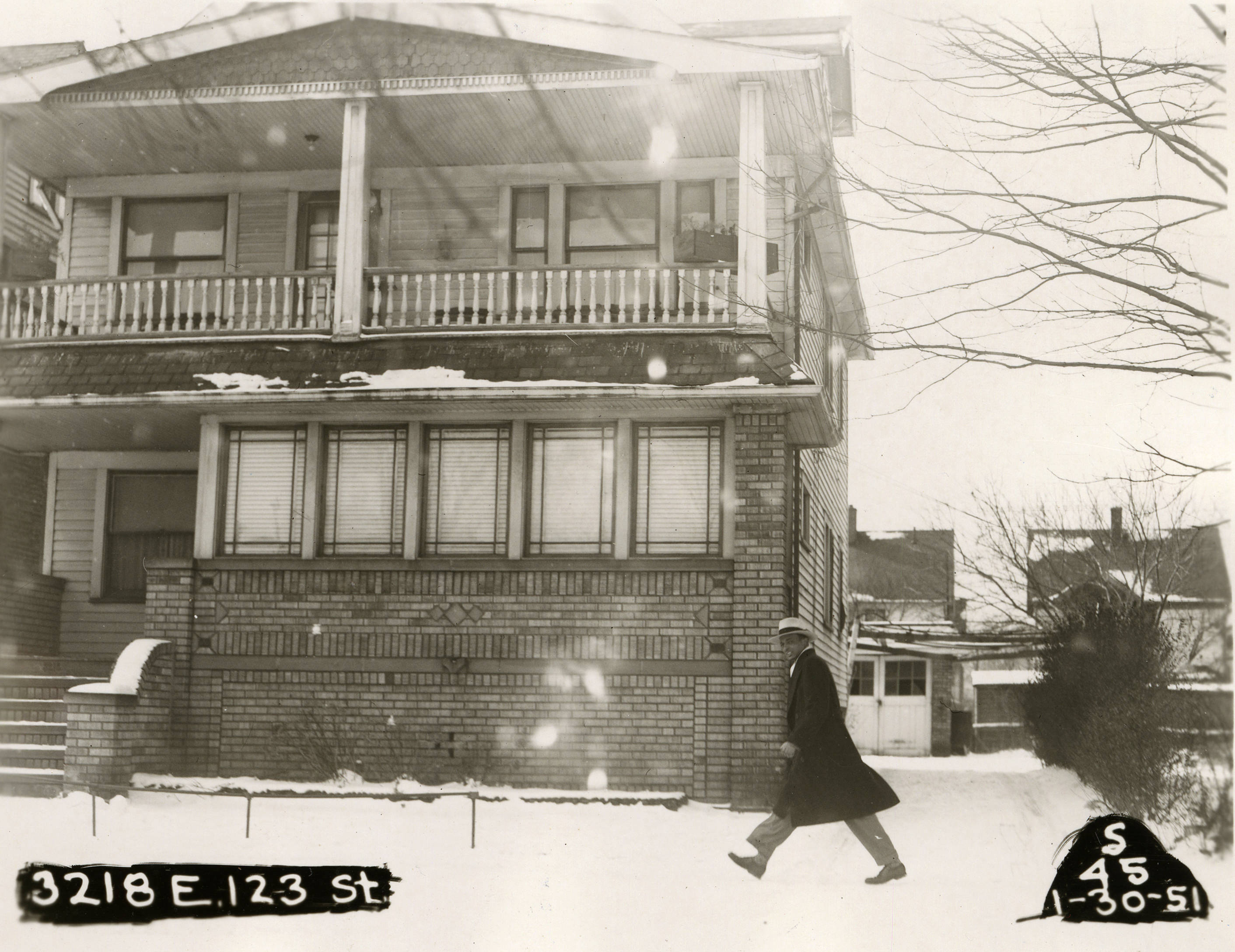
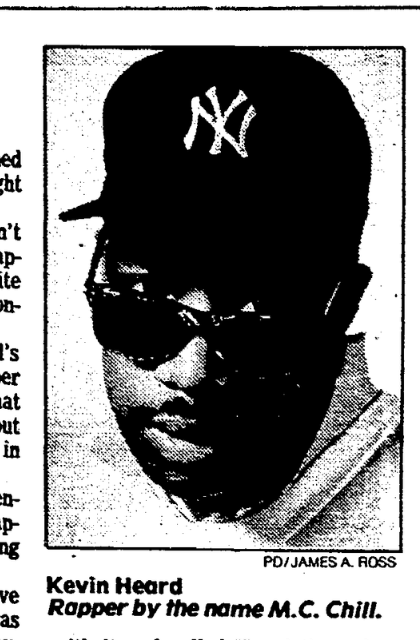
Raised in Lee-Harvard, Kevin “Chill” Heard, also known as MC Chill, was Cleveland’s first nationally recorded rap artist. Because of artists like Chill, the rise of hip hop in Cleveland and in northeast Ohio was inextricably tied to southeast side neighborhoods like Lee-Harvard. And the scene wasn’t just music. It was dance and graffiti and the clothes that everyone wore. It was a movement, and Cleveland was on the cutting-edge.
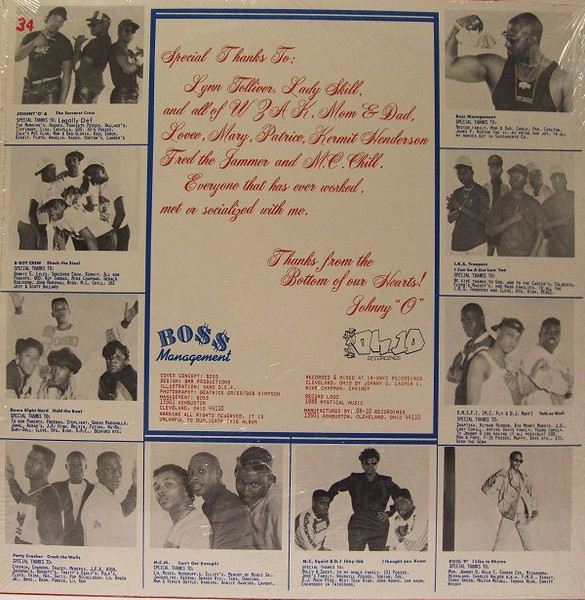
music
Chill says that hip hop was born, Cleveland-wise, at a Saturday night radio show on FM 108 WDMT. The show was called Clubstyle Show, and in its early iteration, DJ Bud McFarlin mixed records and inspired young DJs across Northeast Ohio. One of these DJs was Chill’s friend from Kent State University, Ernest Collier, better-known as DJ Cochise. At Kent State, Cochise learned even more about hip hop from his roommate from New York. He began to rap and mix rap records at parties when, at the time, the status quo was R&B.
Around the same time, Chill heard “Rapper’s Delight” by The Sugarhill Gang and the music spoke to him. He began to rap, pioneering the scene alongside other prominent Cleveland hip hop artists, such as Cochise and DJ Johnny’ O. He and Cochise formed a group called The Bomb Squad that included other rappers such as DJ Finesse and Wayne G.
In 1981, Cochise entered The Showdown, a radio DJ battle at FM 108 WDMT. Despite being a newcomer and the only hip hop DJ in the battle, he won, and he put himself and the other members of The Bomb Squad on the map. According to Chill, the city’s hip hop scene began that night (Stursa).
In 1985, Chill signed to the New York label, Fever Records, which was was unprecedented. In the mid 80’s, the hip hop scene was tightly tied to artists in the South Bronx.
“And I was kind of the predecessor to other cities because there was no Atlanta, there was no Detroit, there was no Miami. Now they might have had, obviously, they might have had hip hop community cultures, but not nationally accepted out of New York City. So I kind of opened the door to let New York City know you don’t actually have to be from New York to have respect and talent of this culture.”-Kevin “Chill” Heard
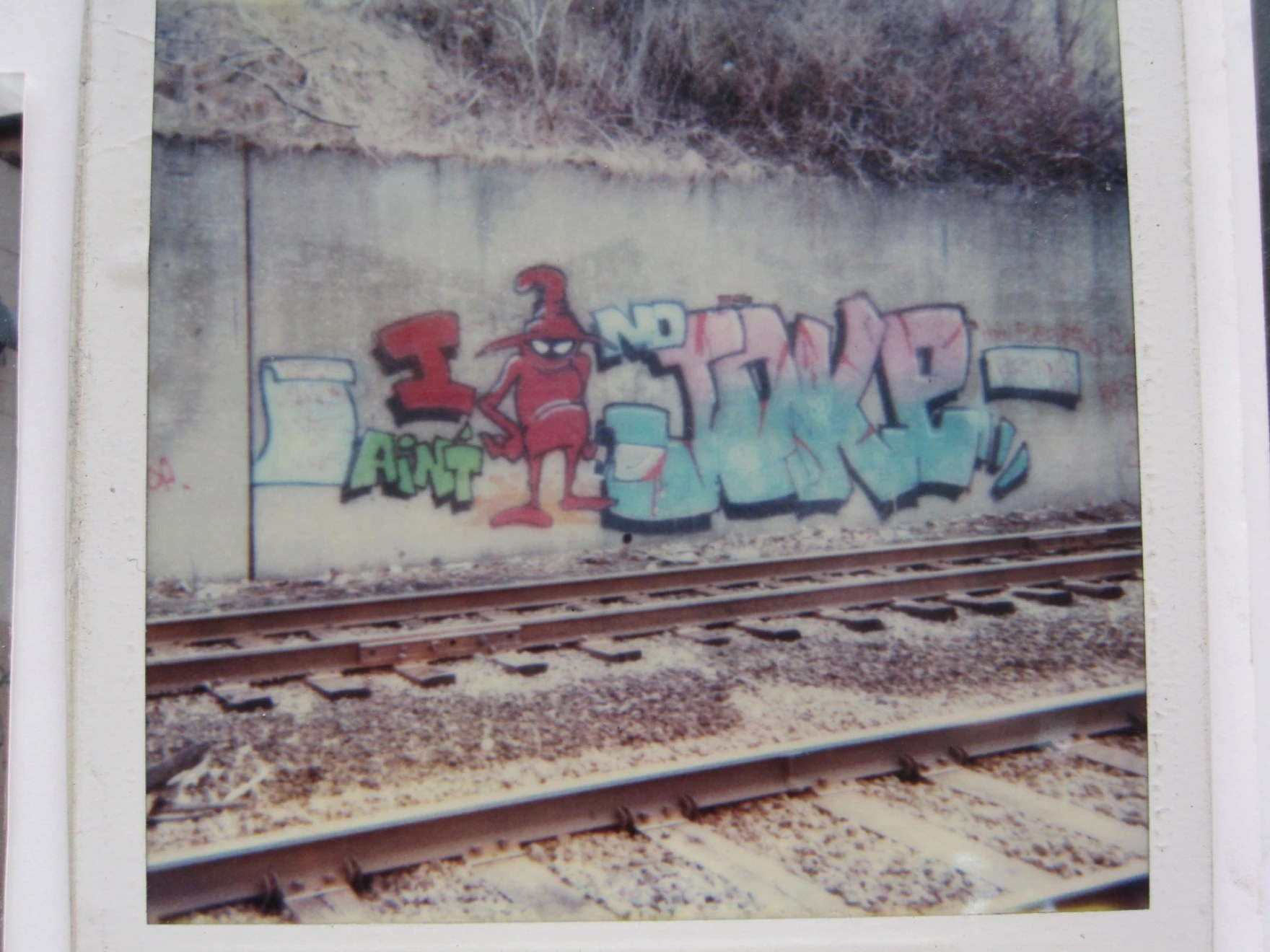
graffiti
Meanwhile, the Cleveland hip hop scene was spreading in other expressions. A 1991 article in the Call & Post stated that the elite graffiti crew, D.E.F (Doin’ Everything Funky), had been active for several years, and included graffiti artists such as mr. soul (from Lee-Harvard) and sano (Callings). Another 1984 article described that Ranger, from Garfield Heights, had tags all throughout the city at age 17 (Pieters). Evidently, most of these artists were kids.
dance
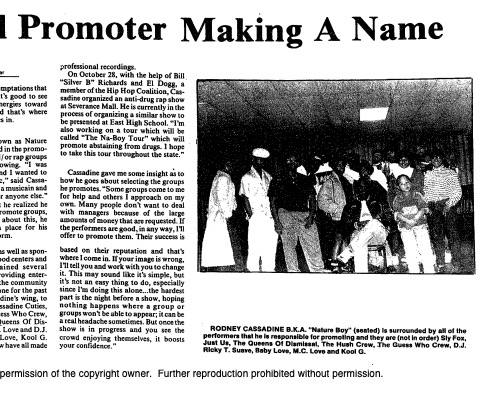
The hip hop dance scene was also blossoming. In 1986, Mikel Jordan and her friends, Cindy and Maria, all from Lee-Harvard, formed a dance group called Just Us. They were young too–Jordan was in her junior year at John Marshall, and the group’s success in the dance circuit was made possible, in part, by the emergence of kiddie clubs and kiddie dance nights. This success brought them across the city for competitions and performances, and they performed alongside other groups.
style
For those that did not necessarily participate directly in the hip hop scene through music, graffiti, and dance, the hip hop style was widespread. Clothing that had been popularized by prominent hip hop artists like Salt-n-Pepa and other New York groups began to gain popularity in the 80s. While these looks were inspired by New York fashion, Jordan notes that southeast side neighborhoods had their own twist on the popular styles of the time period.
“…in my neighborhood, that was more a mixture of preppy and I don’t even know what you would call it. Like there were a lot of Levi hard cuts, you know, but ironed real crispy… Chuck Taylor’s…They were big for a minute. But then you got into like the, the hip hop attire too. Like the Adidas shell toes and the Adidas jog suits and stuff like that… But, like, Shaker was definitely more… the preppy kids because that’s how they were required to come to school. And then you had more of the Down The Way look, like the Timberlands and sweats and grungier look.”-Mikel Jordan
southeast side impact
By being signed to a New York record label as a Clevelander raised in Lee-Harvard, Chill demonstrated that the hip hop scene in Cleveland was distinct, vibrant, and important; that it was built by young people from the southeast side of Cleveland who experimented with music, fashion, and new forms of expression. The impact of these neighborhoods’ cultural wealth cannot be overstated.
“…for us to be kids and didn’t have no money, we found a way to express ourselves, to gather, to dance, to dress.”-Mikel Jordan
This post was inspired by 2025 interviews done for the Cleveland Regional Oral History Project. The full interview with Kevin “Chill” Heard is located here. The full interview with Mikel Jordan is located here.
Sources
Callings, Tina. “Cleveland Artist Make Comic Strip Debut .” Call and Post, 31 Oct. 1991, pg. 5, http://ezp2.cpl.org/login?url=https://www.proquest.com/hnpclevelandcallpost/historical-newspapers/cleveland-artist-make-comic-strip-debut/docview/184587708/sem-2?accountid=1810. Accessed 3 Mar. 2025.
Cochise, DJ. “Bio: The TRUE Story of Northeast Ohio’s (Cleveland, Ohio and beyond) Hip-Hop/Rap Scene .” DJ COCHISE, 2023, djcochise.com/bio.
Pieters, Lurlena. “Graffiti Art Becomes Increasingly Popular in Cleveland .” Call and Post, 16 Aug. 1984, pp. 5B-5B, http://ezp2.cpl.org/login?url=https://www.proquest.com/hnpclevelandcallpost/historical-newspapers/graffiti-art-becomes-increasingly-popular/docview/184658410/sem-2?accountid=1810. Accessed 3 Mar. 2025.
Stursa, John. “How MC Chill Became Cleveland’s First Rap Star.” I’m From Cleveland, 12 Feb. 2019, imfromcleveland.com/blogs/news/how-mc-chill-became-clevelands-first-rap-star.
 Southeast Side Stories
Leave a comment