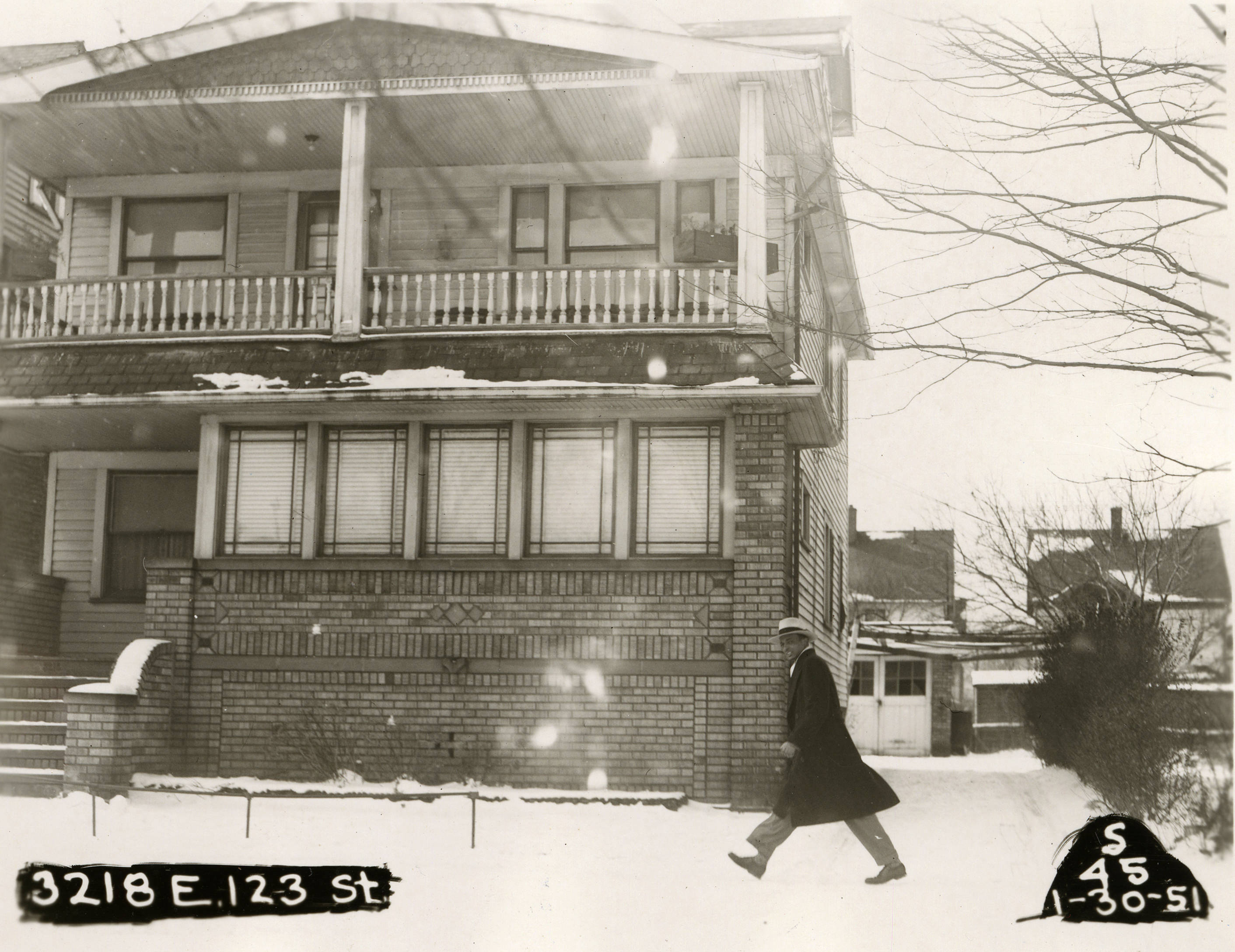
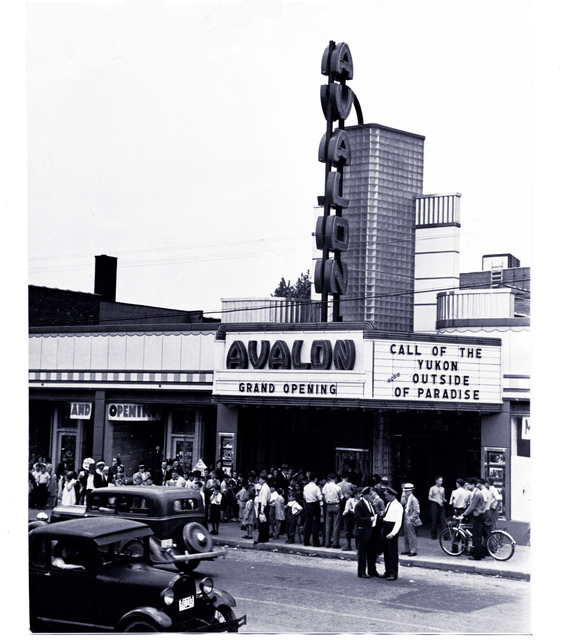
Driving down Miles and Kinsman today, it is hard to believe that the large, brick buildings once housed movie theaters and skating rinks. And not just one or two: they were scattered across the neighborhood. While most movie theaters in Union-Miles and Mt. Pleasant closed by the 1970s, skating rinks flourished from then onwards, leading to the development of the distinct Cleveland Style of skating.
Movie theaters and skating rinks provided places for young people and neighbors to gather. Still, as public spaces, they also provided a setting for the racial dynamics of the time period to unfold. Sometimes, this meant that public spaces were places where Black people could organize comfortably despite segregation. Other times, this meant that movie theaters and roller skating rinks in these neighborhoods were unofficially segregated and that Black customers experienced discrimination.
Movie theaters, in particular, were an example of this. In 1934, the Call & Post reported that a woman was severely beaten by three white men while waiting in line at the Mt. Pleasant theatre on E. 131st Street and Kinsman Road (Mrs. May Brooks Attacked in Theater Lobby While Waiting to Get In).
In a 2025 oral history interview, Yolanda Steward-Barnes, who grew up near E. 131st in the 50s and 60s, noted that even years later, the Avalon Theatre on E. 131st was unofficially segregated.
“It wasn’t like, down South where they would tell you, you gotta sit here, you gotta sit there. They didn’t say it. They just did little things… So the Blacks just automatically sat on this side and the whites automatically sat on that side. And then you had your ushers, and the ushers were white…If you were Black, you couldn’t be an usher. And depending on the ushers, if you just said the least little thing, they would throw you out.”
-Yolanda Steward-Barnes
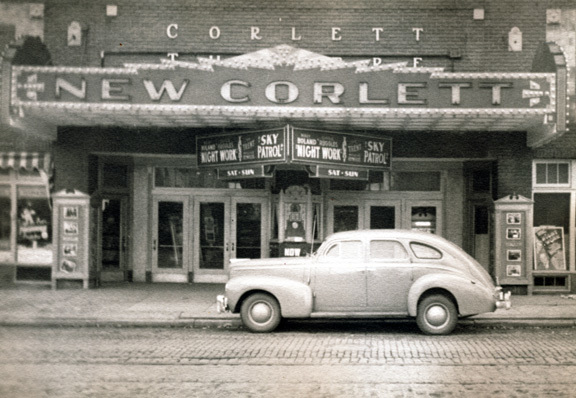
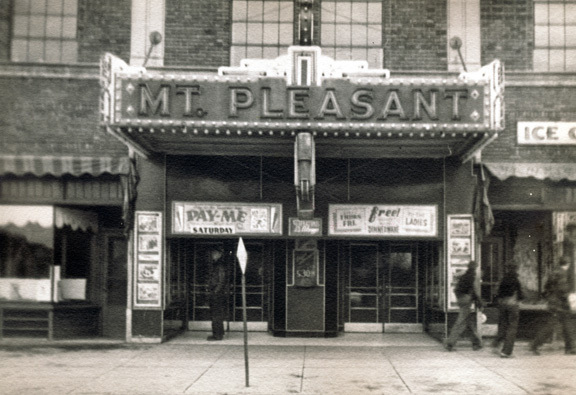
Images courtesy of Cinema Treasures
Maybe more uplifting, though, is how Black Clevelanders responded to the segregation of recreational spaces. In 1942, Elmer “Al” Collins opened Pla-Mor skating rink on Cedar and E. 107th Street on the east side. According to Cleveland Scene, this was the only Black-owned skating rink in Cleveland at that time, and it was the only place that Black people could skate during Cleveland’s segregation (Wallace).
Pla-Mor burned down during the Hough Uprisings, but eventually, more Black-owned skating rinks popped up to fill its void. One of these rinks was Seven Bells Skating Rink, located at 4109 E. 131st Street in Union-Miles. While smaller in size, it was a spot for people of all ages on the southeast side. Newspaper clippings from the Call & Post indicate that the roller rink hosted a variety of events.
Another neighborhood rink was Cleveland’s Roller Bowl on E. 93rd and Sandusky, which seems to have opened earlier, but was not Black-owned, like Seven Bells. Still, southeast side residents expressed that both rinks were places they remember spending time at in their childhood.
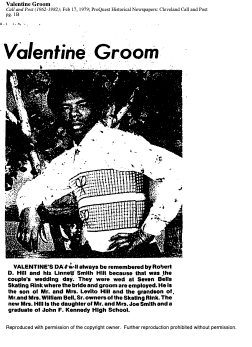
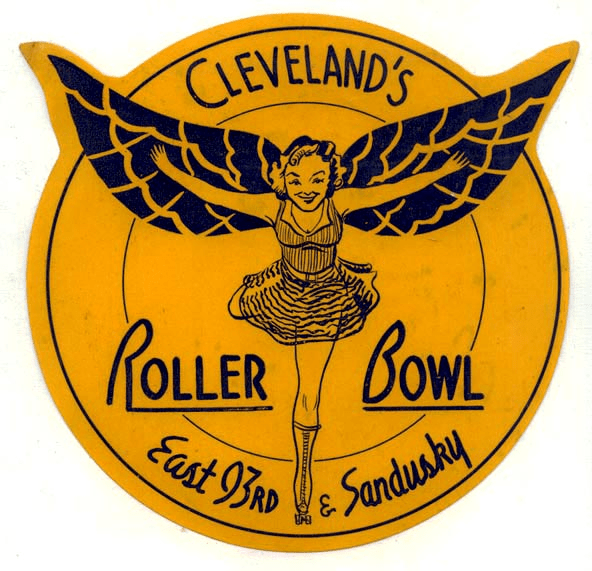
“On Saturdays during the school year, a short, periwinkle blue bus would pick kids up in front of the Dairy Queen on Harvard and ferry us to a roller skating rink like the Blue Goose or Seven Bells-both outside of Lee-Harvard but a popular destination for the younger set. My small self would skate to the carpeted middle pole and just hang on while trying not to fall. It wasn’t easy keeping out of the way of whizzing teens boogying, bouncing, and rolling backwards and forwards to the latest sounds.”
–Snippets of Lee-Harvard in the 70s, Janice A. Lowe, page 138
While not much is written about these skating rinks, residents fondly remember the time they spent at the lively neighborhood establishments. And there is no doubt about it – Cleveland’s vibrant skating culture was developed and encouraged at Black-owned rinks like Seven Bells – places that provided the space for expression without the threat of discrimination.
Works Cited
Lowe, Janice A. “Snippets of Lee-Harvard in the 70s.” The Cleveland Neighborhood Guidebook , Belt Publishing , Cleveland, Ohio, 2016, pp. 132–146.
“Mrs. May Brooks Attacked in Theater Lobby While Waiting to Get In.” Cleveland Call and Post (1934-1962), 06 Oct., 1934, pp. 1. ProQuest, https://login.oh0051.oplin.org/login?url=https://www.proquest.com/historical-newspapers/mrs-may-brooks-attacked-theater-lobby-while/docview/184062122/se-2.
“Valentine Groom.” Call and Post (1962-1982), 17 Feb., 1979, pp. 1. ProQuest, http://ezp2.cpl.org/login?url=https://www.proquest.com/historical-newspapers/valentine-groom/docview/184493981/se-2.
Wallace, Emanuel. “Still Rolling: Adult Nights Are Keeping Cleveland’s Rich Black Roller Skating Culture Alive.” Cleveland Scene, Cleveland Scene, 27 Feb. 2019, http://www.clevescene.com/news/still-rolling-adult-nights-are-keeping-clevelands-rich-black-roller-skating-culture-alive-29384322.
“Yolanda Steward-Barnes interview, 14 January 2025” (2025). Cleveland Regional Oral History Collection. Interview 483009.
https://engagedscholarship.csuohio.edu/crohc000/1353


Leave a Reply